
Professional Scrapbook Construction: Chicago Screw Extension Limits for Archival Photo Storage
Ever spent three weekends straight obsessing over paper weight, acid-free adhesives, and alignment only to watch your masterpiece buckle under its own weight? Yeah, it hurts. As someone who has spent over a decade in high-end paper preservation, I have seen far too many heirloom albums turn into structurally compromised accordion disasters. The culprit usually isn't the paper or the ink. It is almost always the hardware holding the whole operation together.
When you are building a custom memory book meant to outlive your great-grandchildren, hardware choice is not a trivial detail. We are talking about professional scrapbook construction here, where micro-adjustments mean the difference between a pristine family heirloom and a warped stack of cardstock. At the heart of this structural debate sits the humble post binding system, specifically when pushing the envelope with Chicago screw extension limits for archival photo storage.
Let us get real for a moment. Most people treat screw posts like legos. You just keep twisting them together until the spine matches your massive stack of photos, right? Wrong. Dead wrong. If you push those metal posts past their physical limits, you are setting yourself up for catastrophic binding failure, uneven pressure distribution, and ruined prints.
So, how far can you actually stretch these little brass and aluminum workhorses before your archival project collapses? Grab a cup of coffee, clear your workbench, and let us dive deep into the mechanics of heavy-duty post binding.
The Mechanics of Post Binding and Chicago Screw Limits
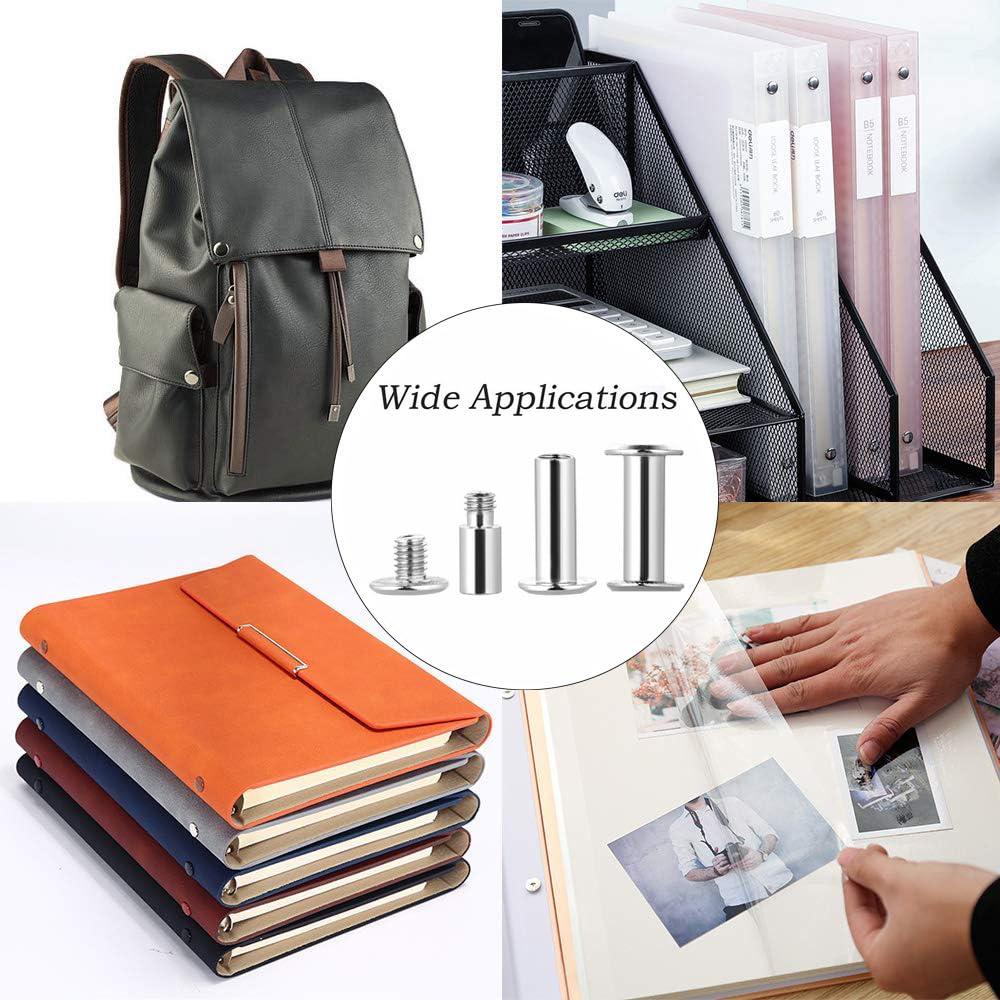
Before we talk about extending hardware, we need to understand how Chicago screws actually work under load. A standard Chicago screw, also known as a binding post or screw post, consists of a threaded female barrel and a male cap screw. In basic professional scrapbook construction, this simple two-piece design creates a rigid clamping force along the binding edge of your pages. Simple, elegant, and totally customizable. Until it isn't.
The trouble begins when your album outgrows the stock post length. Naturally, you grab a few extension posts—those handy little threaded tubes—and start stacking them up. But here is the physical reality: every junction point between an extension and a post introduces a point of mechanical deflection. The longer the overall post becomes, the higher the leverage exerted against the outer edges of the spine. When you pack heavy archival photo storage pages into that mix, the lateral strain increases exponentially.
Honestly? Most crafters don't realize that metal bends under sustained internal friction. When an extended screw post spans too long a gap without center support, the middle section sways. This creates an invisible curvature along the binding margin. Instead of holding your pages in a tight, uniform block, the extended posts force the inner page edges to pinch while the outer margins fan out. That uneven pressure translates straight into your precious photographic prints.
Look—physics does not care about your sentimental layout. If your binding posts flex, your page margins warp. It is as simple as that. Controlling your Chicago screw extension limits for archival photo storage is not just about keeping the book together; it is about maintaining a perfectly flat mechanical stress environment for paper preservation over decades.
Understanding Structural Load Distribution
Load distribution along a post-bound spine is purely a force-vector problem. When an album sits vertically on an archival shelf, the weight of the heavy photo pages pulls downward against the horizontal posts. If the binding post is too long, the post acts as a cantilever beam, bending slightly downward in the center under the sheer gravity of your paper stock.
This sagging effect pulls the page holes out of alignment. Over time, the sharp metal threads inside extended post junctions can actually shear into the edges of your acid-free page protectors. To prevent this, professional binders calculate the weight per inch of spine before selecting post diameters. You cannot just use standard quarter-inch posts for an album that spans four inches deep without expecting major structural sag.
Furthermore, the clamping tension must be evenly distributed across the entire length of the hinge strip. When extensions are stacked excessively, the torque applied when tightening the end cap screw gets lost in the friction of multiple internal threads. You think you are tightening the whole post, but you are really just binding the top two extension units while the middle remains loose and unstable.
The Golden Ratio of Extension Stacking
Is there a hard cap on extension limits? Absolutely. Through trial, error, and a few painful album collapses early in my career, I found that you should never exceed a 1:1 ratio between original post length and added extensions. If your base post is one inch long, adding more than one inch of total thread extension severely compromises structural integrity.
Specifically, chaining more than three individual extension pieces together creates too many points of structural weakness. Every threaded joint is a potential pivot point for lateral movement. If your project demands a spine thickness greater than two and a half inches, relying solely on standard threaded extensions is asking for trouble.
Instead of stacking tiny quarter-inch extensions like poker chips, always swap out the main body post for a single, longer solid barrel post. Solid barrels eliminate the internal micro-wobble of multiple threaded joints, giving your archival photo storage the rigid baseline it actually needs to support heavy photo weight.
Remember this simple rule of thumb: fewer joints equal a stronger spine. If you can see five tiny seam lines along your exposed binding post, your album's mechanical structure is hanging by a thread—literally.
Archival Standards and Structural Stress on Photos
Now, let us talk about the photos themselves. We spend small fortunes on acid-free paper, lignin-free mounting corners, and museum-grade polyester sleeves. But what happens when your hardware choice ruins all that preservation work? It happens way more often than you would think, mostly due to poor tension management at the spine.
When you force a oversized page block into an overly extended post system, the interior pages experience extreme localized compression. As the album opens and closes, that compressed area acts as a mechanical stress point. Photos mounted close to the binding gutter begin to suffer from surface abrasion, planar distortion, and eventually gel-coat cracking due to concentrated pressure.
Seriously, it breaks my heart to see 100-year-old original prints crack because the binding post was torqued down unevenly across an over-extended screw system. Proper archival photo storage requires controlled environment conditions, yes, but it also demands controlled physical pressure. Your pages need room to breathe as ambient humidity shifts throughout the year.
Paper expands and contracts. Metal posts do not. If your Chicago screw system is extended to its maximum limit and clamped down tightly without proper spacer guards, humidity fluctuations will cause the expanding paper to push violently against the inflexible metal posts. The result? Buckled pages, torn mounting strips, and stressed photo emulsions.
Managing Gutter Creep and Spine Flares
Ever notice how an album gets thicker near the outer edge than it is at the spine once you add photos? That is called "spine flare," and it is the absolute enemy of professional bookmakers. To compensate, crafters often add thick paper spacers near the spine holes. But here is the catch: spacers add massive bulk to the binding area, forcing you to use even longer screw extensions.
Managing gutter creep requires a delicate balance between post extension length and spacer density. If your screw post is extended too far to accommodate heavy spacers, the torque from the outer edge of the album will pry the binding covers apart. You end up with a v-shaped spine profile that lets dust, light, and air migrate right into your page pockets.
To eliminate this, professionals rely on precision-cut archival board spacers that match the exact thickness of your mounted photographs. By pairing exact spacer thickness with a single, un-extended solid post, you eliminate the mechanical slop that causes gutter creep in the first place.
Never rely on screw post extension length to solve your spine flare problems. Hardware should hold pages securely, not act as a flexible spring to absorb layout bulk errors.
Material Selection: Brass vs. Aluminum Hardware
Not all Chicago screws are built the same. If you head to your local hardware store, you will likely find aluminum, nickel-plated steel, and solid brass options. For serious professional scrapbook construction, material selection matters just as much as post length.
Aluminum posts are lightweight and inexpensive, but they are soft. The threads inside aluminum extensions strip easily when subjected to high lateral strain. If you are extending a post to two inches or more, aluminum threads can shear under the sheer torque of turning heavy album pages, leading to sudden binding failure.
Solid brass or nickel-plated steel, on the other hand, offer superior tensile strength and rigid thread tolerance. Brass posts will not flex under high lateral loads, maintaining a true, perpendicular axis through your page block. When building large-format memory books, always opt for solid brass hardware to ensure your extension posts do not warp or snap over time.
Also, watch out for un-plated raw steel. Over time, raw steel can oxidize, releasing microscopic rust particles into the surrounding paper binding margins. Stick to verified archival-safe, non-reactive plated metals or solid brass.
Best Practices for Heavy-Duty Post Bound Albums
If you are determined to build a thick, high-capacity album using post binding techniques, you need to step up your construction strategy. You cannot just rely on standard off-the-shelf supplies and hope for the best. Long-term structural integrity requires active reinforcement, precise measurement, and smart load-bearing design choices.
First off, let us address the structural spine cover. A loose post-bound album with exposed screw posts has zero lateral stability. As you extend the posts, the entire page block can shift left and right like a stack of loose cards. To stop this lateral shear, your album design must incorporate a rigid spine cap or a heavy-duty wrap-around cover system that locks the post heads into a fixed alignment channel.
Look—I love open-spine post bindings for small, lightweight journals. They look rustic and cool. But for an 80-page, heavy-duty archival photo storage vault? An open-spine design with multiple extended Chicago screws is an engineering nightmare waiting to happen. Give that spine a solid shell to rest against.
Next, let us talk about safety margins for post extension limits. Below is a quick rule-of-thumb guide I developed in my shop to keep project hardware operating within safe mechanical limits:
- Up to 1 Inch Spine Thickness: Standard single-piece Chicago screws (Aluminum or Brass). Zero extensions needed. Perfect structural rigidity.
- 1 to 2 Inches Spine Thickness: Upgrade to solid brass heavy-duty barrel posts. A maximum of one precision extension post allowed per station.
- 2 to 3 Inches Spine Thickness: Dual-channel post binding required. Solid brass posts only. Must use outer spine reinforcement channel to prevent lateral post flex.
- Over 3 Inches Spine Thickness: Stop right there! Post binding is no longer mechanically viable. Transition the project to a custom clamshell box or split the contents into a multi-volume album series.
Respecting these mechanical thresholds will save you from the nightmare of a broken binding during a family presentation or client hand-off.
Reinforcing Page Binding Margins
Your binding hardware is only as good as the paper it passes through. If your page stock is too light, extended metal posts will slice through the binding holes under the weight of mounted photos. Reinforcing the inner margins of your pages is non-negotiable for long-format memory books.
Always use heavy cardstock hinging strips (at least 80lb cover weight or higher) or archival cloth tape to reinforce the hole-punched margin of every single page. This creates a flexible hinge that absorbs the mechanical movement of page-turning, relieving direct force from the Chicago screw post itself.
Additionally, make sure your page punch holes leave clean, crisp edges without any micro-tears. A loose or jagged hole margin allows the page to shift out of alignment, putting uneven drag against the extension post joints. High-precision hollow-punch tools are infinitely superior to standard desktop office hole punches for this reason.
By reinforcing the paper margin, you effectively share the load between the metallic hardware and the structural fiber of the page, minimizing stress across the entire system.
Alternative Archival Binding Systems for Large Capacity
What happens when your project simple outgrows even the absolute limit of Chicago screw extensions? Do not try to force it. When you hit that 3-inch thickness wall, it is time to pivot to alternative structural designs that honor archival safety.
- Segmented Multi-Volume Sets: Instead of building one massive, unmanageable 4-inch monster album, break the collection into chronological Volume I and Volume II books. This protects individual pages and makes viewing far more enjoyable.
- Custom Drop-Back Clamshell Box Storage: Store your post-bound page blocks in un-bound, fully supported archival protective enclosures until presentation. This removes sustained gravitational pull on binding holes entirely.
- Traditional Stitched Archival Bindings: Move away from mechanical posts and utilize library-style cord sewing or stub-bound structures. Stitched spines distribute page weight smoothly across continuous cloth hinges without hard point stress.
Knowing when to ditch the screw post in favor of a specialized binding format is the true mark of a master craftsman. Don't let pride or laziness ruin years of preservation work.
Common Questions About Chicago Screw Extension Limits
What is the maximum safe length for a extended Chicago screw post in photo albums?
For standard photo storage, the maximum recommended safe length for an extended Chicago screw post assembly is 2.5 inches. Exceeding this limit causes excessive flex along the post barrel, leading to page sagging, alignment failure, and potential physical damage to mounted archival photos. For spines thicker than 2.5 inches, split the contents into multiple volumes or switch to a stitched binding system.
Can I mix aluminum and brass extension posts on the same binder assembly?
It is strongly advised not to mix metals within a single binding post assembly. Aluminum and brass have different thread tolerances, hardness levels, and thermal expansion coefficients. Threading hard brass extensions onto softer aluminum posts can easily strip the internal threads, leading to unstable clamping force and unexpected hardware failure under heavy load.
Why do my scrapbook pages buckle near the spine even when using screw extensions?
Page buckling near the spine usually occurs due to missing margin spacers or excessive clamping torque on extended posts. As you add thick photos to pages, the outer edge of the album expands while the spine edge remains tightly pinched. To fix this, insert acid-free paper or board spacers along the post margin to match the thickness of your photo mounts, ensuring the album rests completely flat from spine to edge.
Are extension posts safe for long-term museum-grade archival photo storage?
Yes, but only if high-quality, non-reactive metals like solid brass or high-grade stainless steel are used. Avoid low-quality plated steel screws that can corrode over time and release rust particles into paper margins. Additionally, ensure the post assemblies do not flex or squeeze the interior storage sleeves too tightly, which can trap moisture or cause mechanical abrasion to delicate photographic emulsions.